
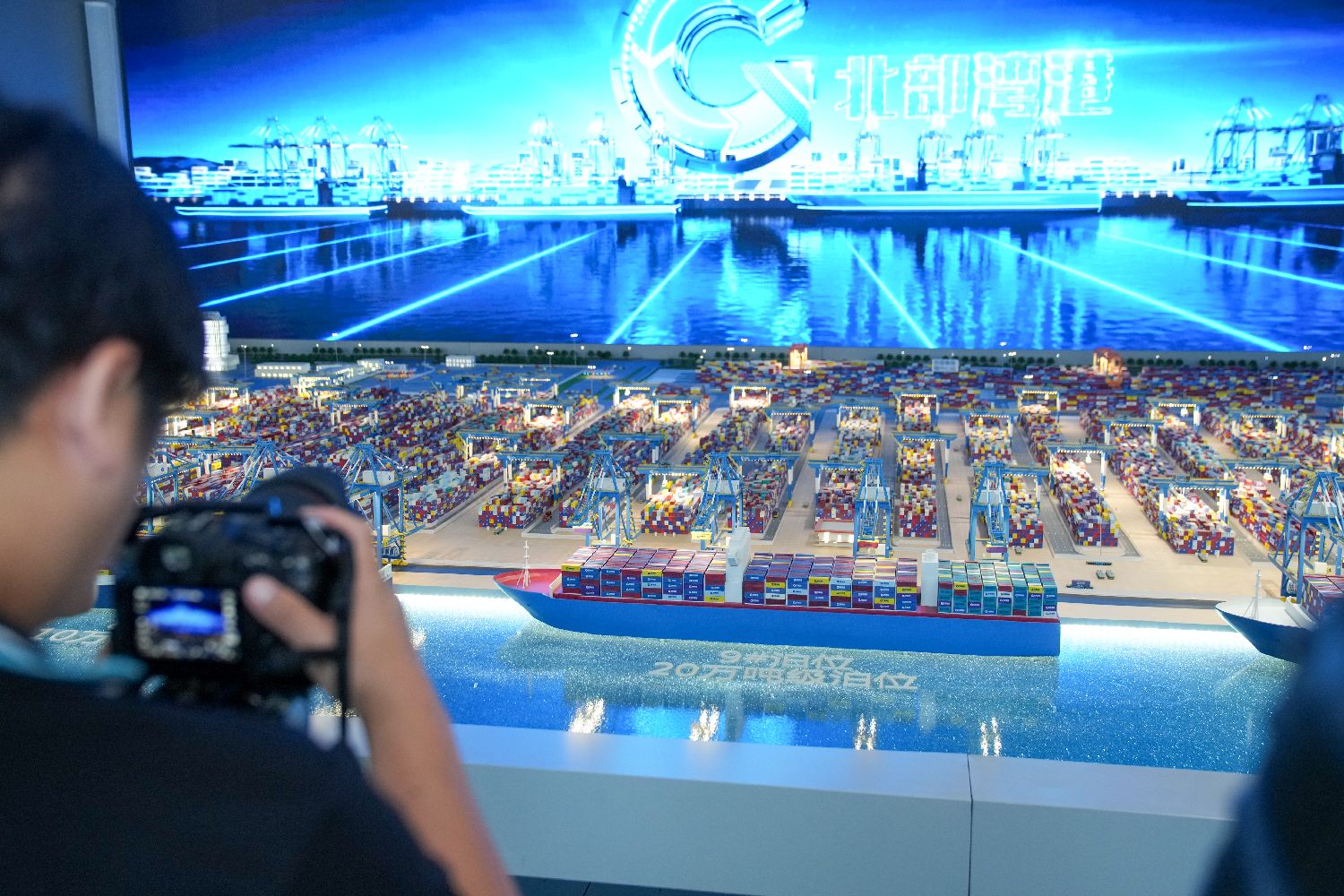
As an international gateway port for the New International Land-Sea Trade Corridor in western China, Beibu Gulf Port in Guangxi is embracing a major historic opportunity as the Pinglu Canal approaches full operation. The port is continuing to strengthen both its physical infrastructure and supporting services for river-sea intermodal transport, expand cross-border logistics cooperation and develop a new multimodal transport network integrating river, sea and rail links. On September 3, the 2026 Overseas Media Tour to Guangxi arrived at Beibu Gulf Port along the Pinglu Canal, giving international journalists an up-close look at the ongoing development of the international hub port and its growing connectivity with inland waterways and global markets.
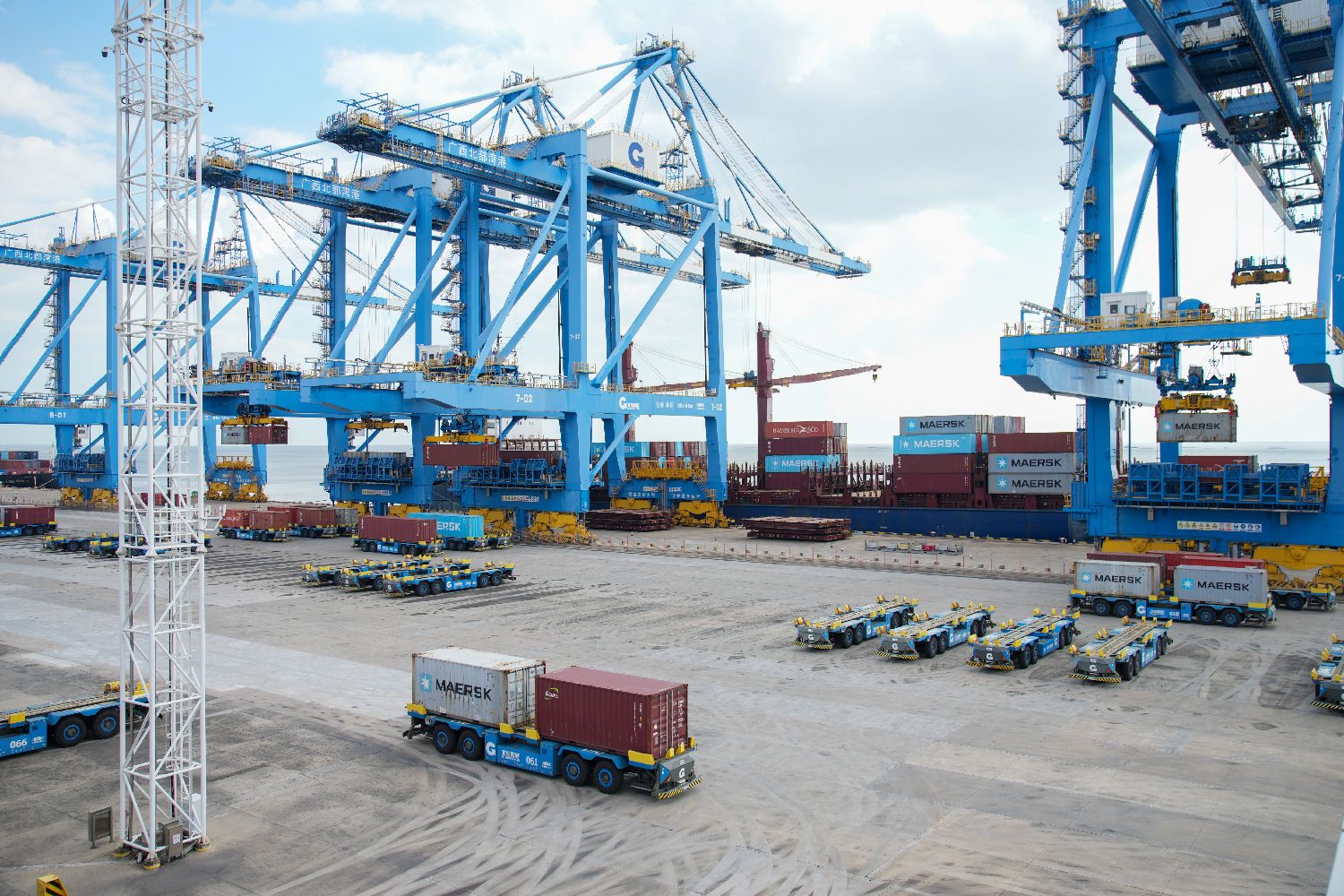
Upgrading Infrastructure and Services for River-Sea Intermodal Transport
Beibu Gulf Port currently has 93 operational berths, with an annual handling capacity of 489 million tonnes. It follows a coordinated development model covering “one port and three port areas”: Qinzhou Port focuses on developing a container hub for mainline services; Fangchenggang Port serves as a hub for the collection and distribution of bulk cargo; and Tieshan Port Area in Beihai focuses on serving industries and enterprises located around the port.
The port currently operates 103 domestic and international container shipping routes. Domestic services connect the port with major coastal ports in China as well as inland ports in the Yangtze River Delta and Pearl River Delta. International services provide direct connections to Southeast Asia, Northeast Asia, the Indian subcontinent and Pakistan, the Middle East, Southern Africa, South America and the U.S. West Coast, while major hub ports including Hong Kong, Shenzhen and Singapore connect the port with global markets.
To meet the demand for river-sea intermodal transport following the opening of the Pinglu Canal, Beibu Gulf Port is systematically upgrading maritime-side berths and advancing major infrastructure projects. A total of 13 berths are being upgraded in batches to accommodate river-sea intermodal operations. Eleven of them have already been completed, passed final acceptance and entered service, all meeting the berthing requirements for inland vessels of 1,000 tonnes or more. The remaining two berths are expected to be completed and put into operation by the end of 2026. A number of major port projects are also being accelerated. Construction of Berths No. 4 and No. 5 at the Shawei Operation Area of the Tieshan East Port Area in Beihai, as well as a 300,000-tonne-class terminal project in Fangchenggang, is about to begin.
To ensure efficient integration with the Pinglu Canal and ensure that the port’s cargo-handling capacity can meet the canal’s future freight demand, Beibu Gulf Port is optimizing the functions of the Jingu Port Area in Qinzhou and advancing the construction of river-sea intermodal berths at locations including the fourth operation area of the Yuwan Port Area in Fangchenggang and the Dalangping South Operation Area in Qinzhou. The port is also integrating railway, highway and waterway resources, improving its multimodal transport service offerings and establishing an end-to-end “door-to-door” logistics network, providing integrated multimodal transport services covering rail, road and waterways.
Reshaping the Transport Network and Deepening ASEAN Cooperation
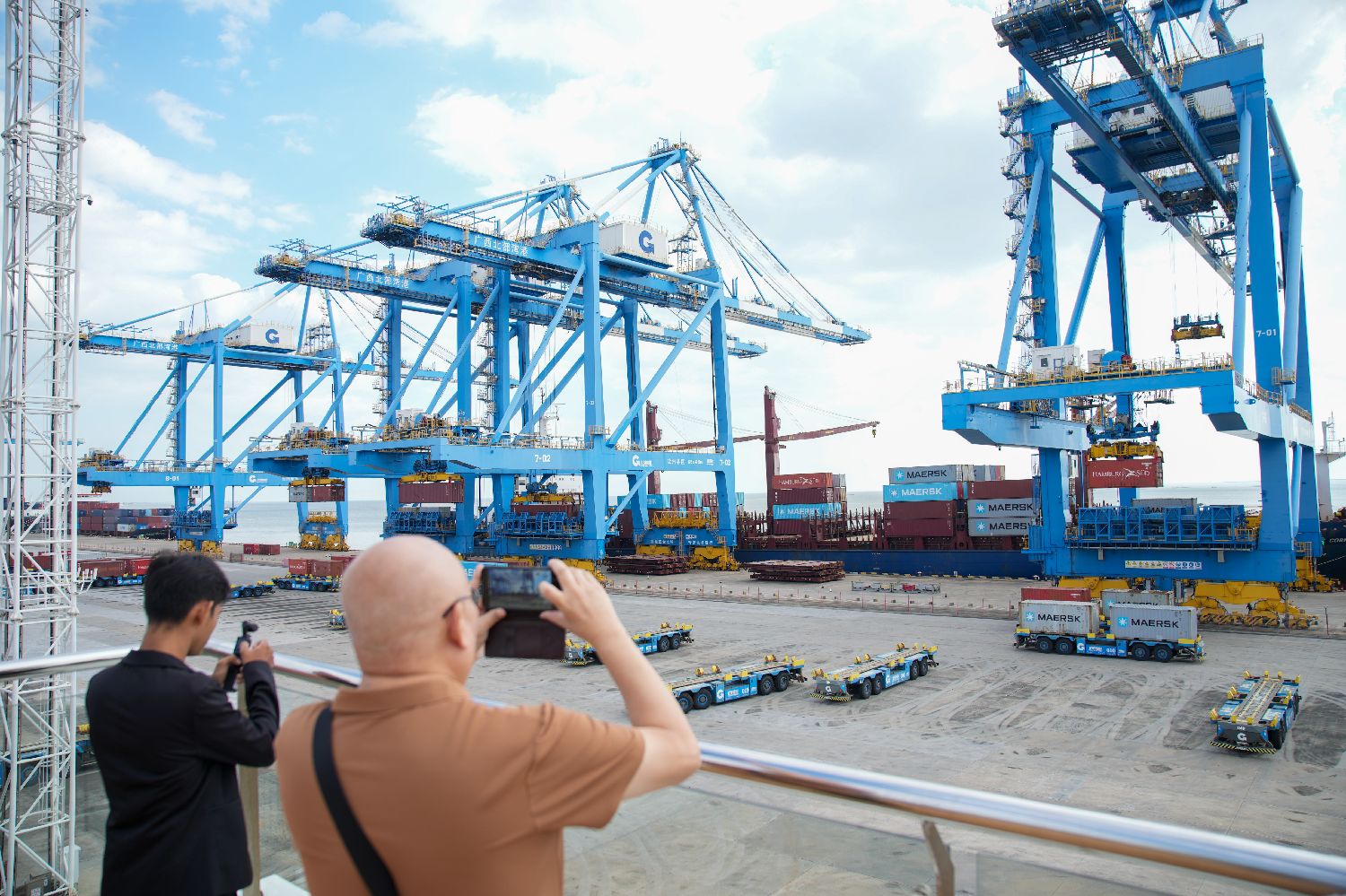
Cargo from the southwestern hinterland of China can reach the sea through the Pinglu Canal, shortening the transport distance by approximately 560 kilometers compared with traditional routes. The canal’s opening is expected to attract more cargo from Yunnan, Guizhou, Sichuan and Chongqing, as well as the Xijiang River basin, to Beibu Gulf Port.
Chen Tao, Director of the Container Marketing Center of the Production and Operations Department of Beibu Gulf Port Co., Ltd., said the opening of the Pinglu Canal will create a convenient and efficient new waterborne route for cargo from southwestern China to reach the sea. The canal is of major strategic significance for optimizing the layout of Beibu Gulf Port and enhancing its role as a regional logistics hub.
Under the framework of the Regional Comprehensive Economic Partnership (RCEP), closer integration between Beibu Gulf Port and the Pinglu Canal is expected to unlock significant trade potential. Xie Jialiang, Deputy General Manager of the Market Operations Department of Beibu Port Logistics and General Manager of the Project Logistics Center, said the Pinglu Canal will connect with the China-Laos Railway and the New International Land-Sea Trade Corridor, helping landlocked countries such as Laos overcome constraints caused by their lack of direct access to the sea. For coastal ASEAN countries such as Vietnam and Malaysia, Beibu Gulf Port has already opened 50 direct container shipping routes to ASEAN destinations. Products such as Malaysia’s Musang King durians can be transported through Qinzhou Port and distributed to southwestern China via cold-chain logistics. Companies in markets outside the region can also leverage river-sea-rail multimodal transport to share the benefits of the corridor.
From the perspective of global supply chains, Xie said, the Pinglu Canal will create a new waterborne logistics axis connecting the “southwestern hinterland, Pinglu Canal, Beibu Gulf Port and ASEAN.” Complementing the sea-rail freight services of the New International Land-Sea Trade Corridor, the new route will help distribute cargo flows more efficiently and gradually optimize logistics patterns in the Asia-Pacific region.
Over the next one to three years, Beibu Gulf Port Group will continue to cultivate two-way cargo flows between China and ASEAN, leverage overseas distribution hubs in Malaysia and Vietnam, improve the “single bill of lading” model for multimodal transport, and develop specialized end-to-end logistics solutions for cold-chain products, bulk commodities and new-energy products.
Smart Waterway Large Language Model Strengthens Digital Foundation for River-Sea Transport
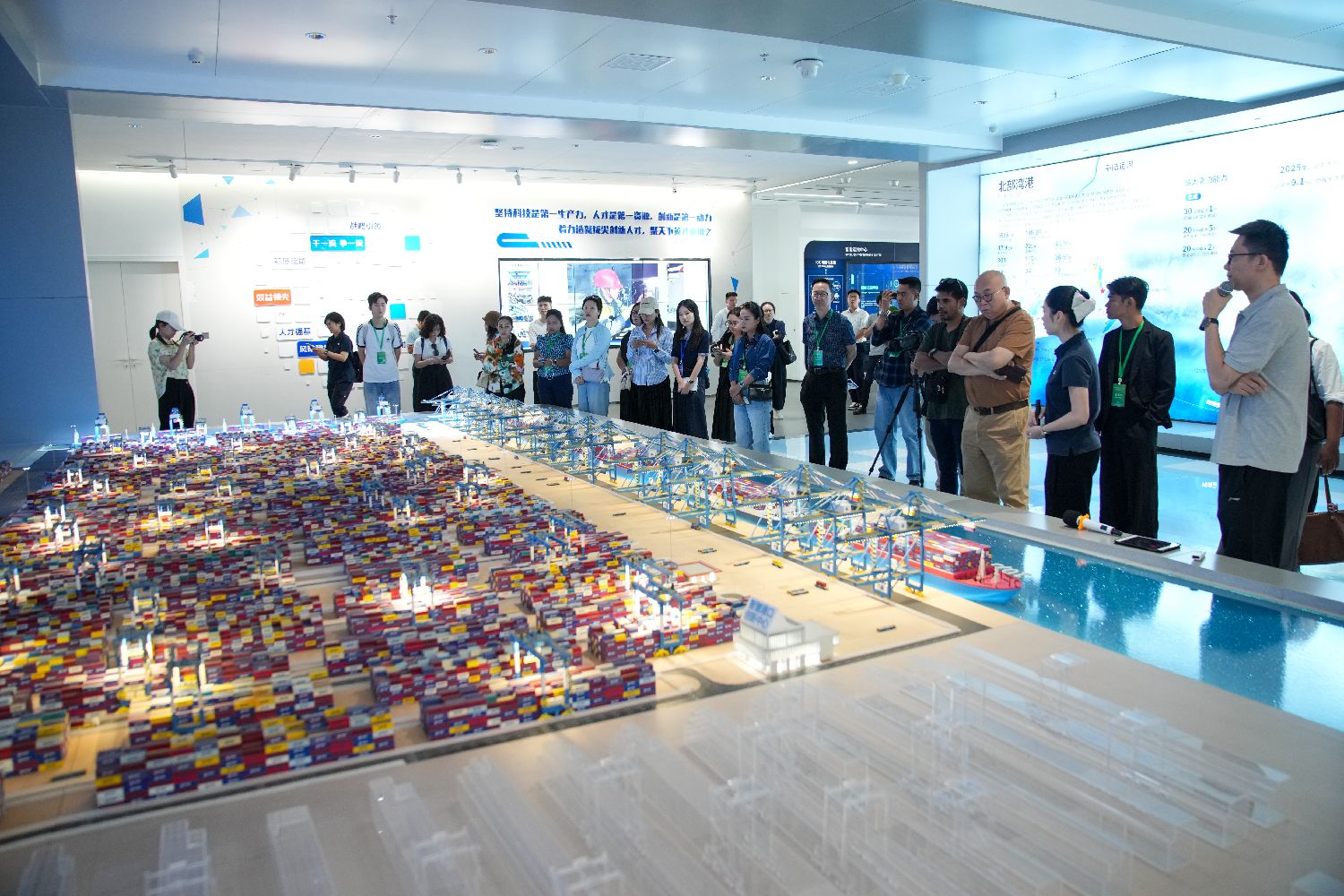
Alongside infrastructure development, digitalization and intelligent technologies are becoming important drivers of high-quality development in river-sea intermodal transport at Beibu Gulf Port. The Smart Waterway Large Language Model for the New International Land-Sea Trade Corridor is among Guangxi’s first open application scenarios under the “Artificial Intelligence Plus” initiative. It focuses on two key operational challenges: vessel-lock scheduling and port berth planning.
Chen Fuqiang, Deputy General Manager of the Science and Information Technology Department of Beibu Gulf Port Group, said the large language model has entered the demonstration application stage. A smart waterway knowledge graph covering more than 10 categories of data sources and 35 million nodes has been developed, with a knowledge extraction accuracy rate exceeding 95%. More than 100,000 high-quality question-and-answer samples have been accumulated to train the waterway-specific model. Its reasoning accuracy in waterway-related scenarios has reached 87 percent, while its safety and compliance pass rate exceeds 98 percent.
The model has already been deployed at the Xijiang River lock complex and the Beibu Gulf port cluster. During a pilot program at the Changzhou water-control project on the Xijiang River, the time required to formulate vessel queuing plans was reduced from 20 minutes to less than 20 seconds. Under the coordinated queuing operation of the four-line lock system, lock chamber utilization increased by 5 percent. At Qinzhou Port, the time required to prepare 72-hour round-the-clock vessel berthing and departure plans was reduced from 1.5 hours to less than one minute, while emergency dispatching was upgraded to a response time measured in minutes.
Chen said that going forward, Beibu Gulf Port Group will use the Smart Waterway Large Language Model to empower a unified intelligent dispatching hub, enabling efficient coordination among seaports, the Pinglu Canal and inland waterways and providing technological support for integrated river, canal and sea operations.
As the Pinglu Canal approaches full operation, Beibu Gulf Port will accelerate the development of a smart waterway network for the New International Land-Sea Trade Corridor in Guangxi, promote coordination across multiple scenarios and business functions, facilitate more efficient integrated operations across rivers, waterways and the sea, and inject new momentum into economic and trade exchanges between China and RCEP member countries. (End)
Photo – CNS
#BeibuGulfPort #PingluCanal #logistics #containerhub #Qinzhou #GuangxiMediaTour #Guangxi #MFN #MyanmarFutureNews
MFN သတင်းများအား အောက်ပါ Link များတွင်လည်းဝင်ရောက်ကြည့်ရှုနိုင်ပါသည်။
Tiktok - https://www.tiktok.com/@myanmarfuturenews
Telegram –https://t.me/myanmarfuturenews
YouTube - https://www.youtube.com/@MyanmarFutureNews-MFN
评论 (0)